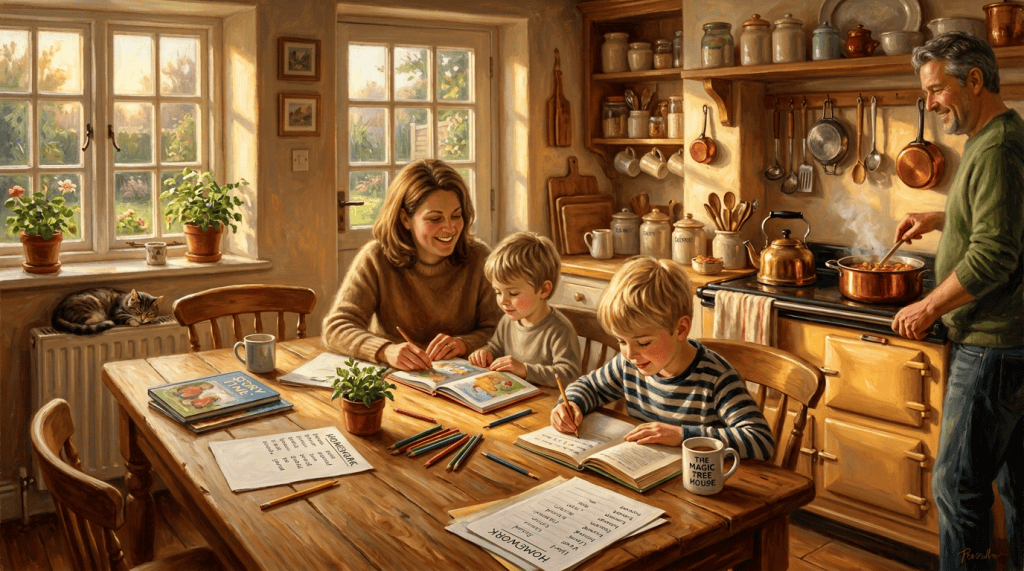
By the time my boys come home from school, they’ve already had a full day.
They’ve listened, learned, focused, followed directions, and spent hours in a busy environment surrounded by constant activity.
When they walk through our front door, they’re usually not eager to sit down for more work. Meanwhile, I absolutely love helping with things like reading, writing, and spelling. My rough-and-tumble boys do not share my enthusiasm. They’d much rather be wrestling on the floor, the couch, the bed, or just about any surface they can find!
As a parent, it can be tempting to jump straight into homework, reading practice, or spelling words the moment they get home. After all, there’s only so much time before dinner, showers, and bedtime. But I’ve learned that rushing into academics often creates resistance rather than cooperation.
Over time, we’ve discovered that success after school has less to do with pushing harder and more to do with finding a rhythm that respects what children need. As much as I enjoy diving into schoolwork, my boys need time to rest, play, move their bodies, and shake off the school day before they’re ready to learn again.

Our After-School Rhythm
Most afternoons follow a simple pattern:
- Snack time
- Play time or quiet time to unwind
- Outdoor play when possible
- Reading, spelling, and/or writing practice
- Dinner
- Showers and bedtime preparations
This rhythm wasn’t carefully planned from the beginning.
It developed through trial and error.
What we’ve found is that the sweet spot for learning often comes while dinner is being prepared.
By then, the boys have had time to rest and transition out of school mode. They’re more receptive than they were immediately after getting home, but not yet completely exhausted from the day.
I’ve noticed that many of our most meaningful family moments happen during these ordinary transitions between school, play, and supper, much like I shared in When Sports Meet Supper Time, where a simple evening routine became a reminder of how quickly these seasons of childhood pass.
Giving Children Some Ownership
We’ve used timers for years to help set expectations and make transitions smoother. Whether it was cleaning up toys, or getting ready for bed, a timer often helped everyone know what to expect.
Then one day, in a completely unplanned, spur-of-the-moment decision, I tried something different.
Instead of telling the boys how much time they had left to play, I asked them how much time they wanted. And to my surprise, it worked! In fact, it’s now my preferred strategy moving forward.
Sometimes they say five minutes. Sometimes twenty.
Within reason, we set the timer together.
It was such a small change, but it made a surprisingly big difference.
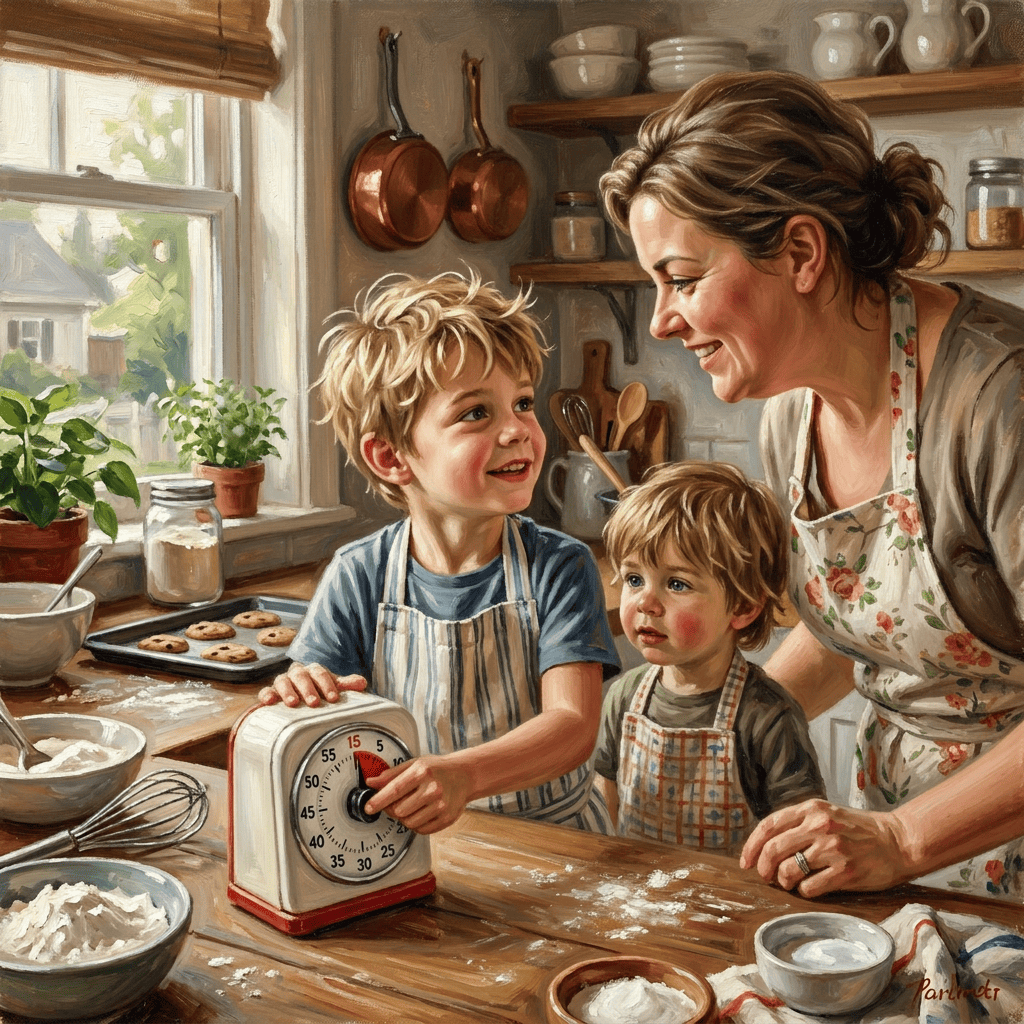
The timer still provides a clear expectation, but now the boys feel like they’ve had a voice in the decision. When the timer goes off, there’s usually far less resistance because they helped decide when that time would be.
I can’t claim this was some brilliant parenting strategy I intentionally developed. It was more of a happy accident that turned out to work really well for our family.
When Learning Meets Resistance
Earlier this year, Freddie went through a phase where nearly every request for schoolwork was met with an immediate “No!”
Sometimes there were tears.
Sometimes frustration.
Sometimes a dramatic declaration that he absolutely wasn’t doing it.
It would have been easy to turn every afternoon into a battle. But honestly, who wants to do battle after a long day of school or work? That wasn’t the kind of atmosphere we wanted in our home.
That’s when we began talking about three simple expectations:
- Have a positive attitude.
- Do your best.
- Work hard.
They’re simple expectations, but they apply to far more than schoolwork.
We’re not focused on perfection.
We’re focused on effort.
Some days the work comes easily. Other days it doesn’t.
What matters most is showing up with a willingness to try.
We return to those same three reminders again and again.
Positive attitude.
Do your best.
Work hard.
Not once.
Not twice.
But over and over.
Little by little, the lessons began to stick.
Not perfectly.
Not overnight.
But gradually.
Trusting the Process
Parenting often feels like planting seeds.
We repeat ourselves.
We encourage.
We guide.
We model.
And then we wonder whether any of it is sinking in.
Until one day, we hear our children repeating the very words we’ve been saying all along.
That’s when we’re reminded that growth is happening, even when we can’t see it right away.
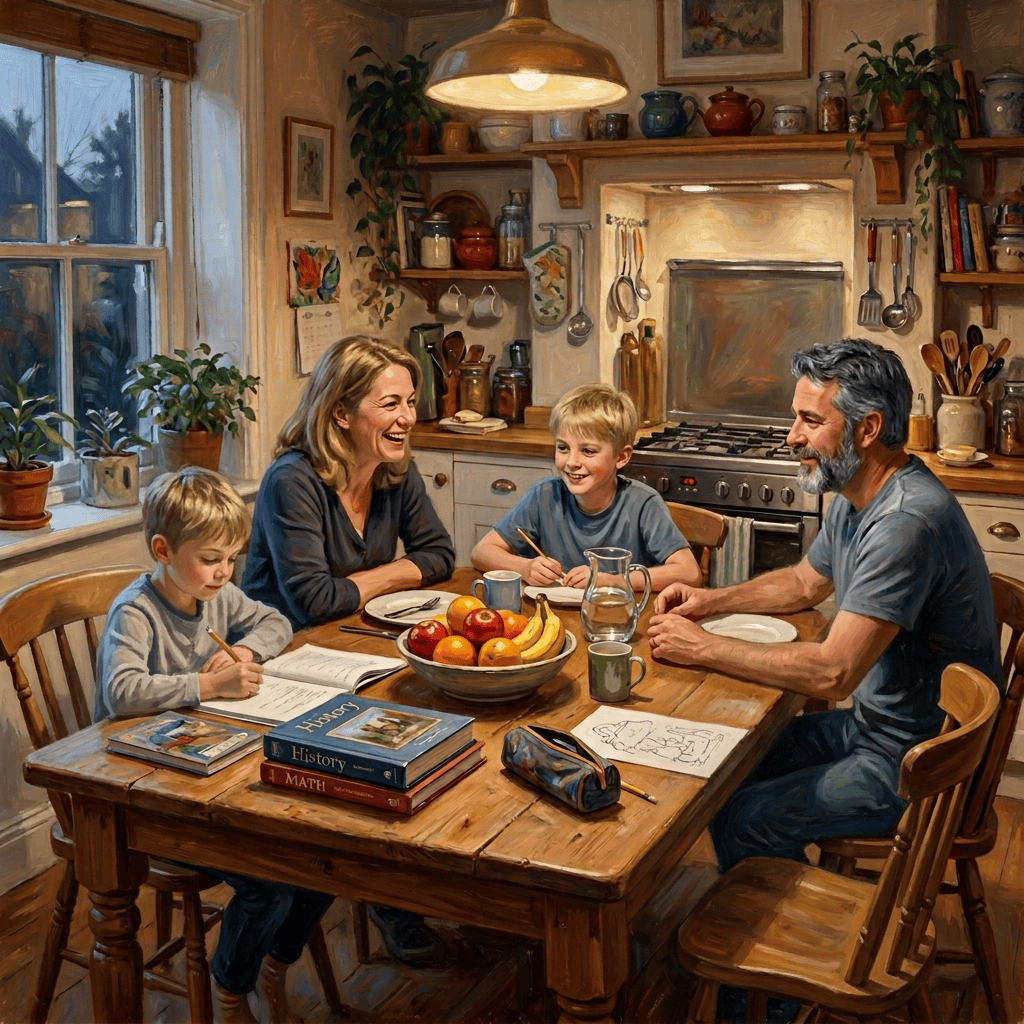
And sometimes the most meaningful learning takes place not during school hours, but around a kitchen table while dinner is cooking and a family is simply growing together.
Your Gentle Reflection
Take a quiet moment for yourself
1. Unexpected Discoveries
When have you stumbled upon a parenting solution almost by accident that ended up working surprisingly well for your family?
2. Your Current Rhythym
What does the hour after school look like in your home right now?
3. The Atmosphere of Home
How do you hope your children will remember the atmosphere of your home during these school-age years?
Continue Reading
If this post resonated with you, you may also enjoy:
🎒 The Preschool Readiness Checklist I Wish I’d Had Before My Son Started School
The lessons, surprises, and practical skills I wish I’d known before my son started school.
🌱 A Four-Year-Old’s Big Day
One child’s milestone, the emotions that came with it, and the reminder that our children are growing up one ordinary day at a time.
New to Gentle Family Living?
If you’re looking for the heart behind this blog and the values that shape our family life, start here: Welcome to Family Harmony & Gentle Home


Leave a Reply