🌿 When School Moves Fast and Home Moves Slow
There are days when I watch my boys move through their routines and I’m reminded just how quickly the world asks children to go. School days are full – transitions, expectations, new skills stacked on top of each other. It’s no one’s fault; it’s simply the rhythm of a room full of kids learning together. But sometimes that rhythm is faster than what my own child needs.
And that’s where home becomes something steady. Something soft. Something spacious.
At home, I get to see the tiny details that a busy classroom can’t always catch – the way Freddie rushes through a letter because he’s excited to be “done,” or the way Cody slows down and studies the shape before he even picks up the crayon. I get to notice their natural pace, their quirks, their hesitations, their sparks. I get to meet them exactly where they are.
Learning at home isn’t about replacing school. It’s about giving my children the breathing room they need to build confidence. It’s about offering a slower rhythm, one that lets them feel capable instead of hurried. One that lets them practice without pressure. One that lets them enjoy the moment instead of racing through it.
Sometimes I forget how much my presence matters – how much it helps when I set beside them, steady and unhurried, tracing a shape with them or watching their hands move. But these small moments are where confidence grows. This is where they learn that they can do hard things, not because someone is pushing them, but because someone is with them.
Home is the place where I get to help my kids be successful in the way that fits them best. And honestly, that feels like one of the quiet privileges of motherhood – noticing what they need, and giving it to them gently.
Some afternoons, our house moves faster than I can keep up with — toys rediscovered, snacks requested, the dogs shifting around the kitchen, the hum of everyday life happening all at once. Freddie, now in first grade, comes home with that bright, buzzing energy he’s always had. He’s quick with everything: quick to talk, quick to move, quick to write. Cody, still in preschool, moves at a different pace — not slower, because he’s a little boy buzzing with energy too, but at times more deliberate, taking his time.
🌈 Rainbow Letters & Shapes: A Cozy Way to Slow Down
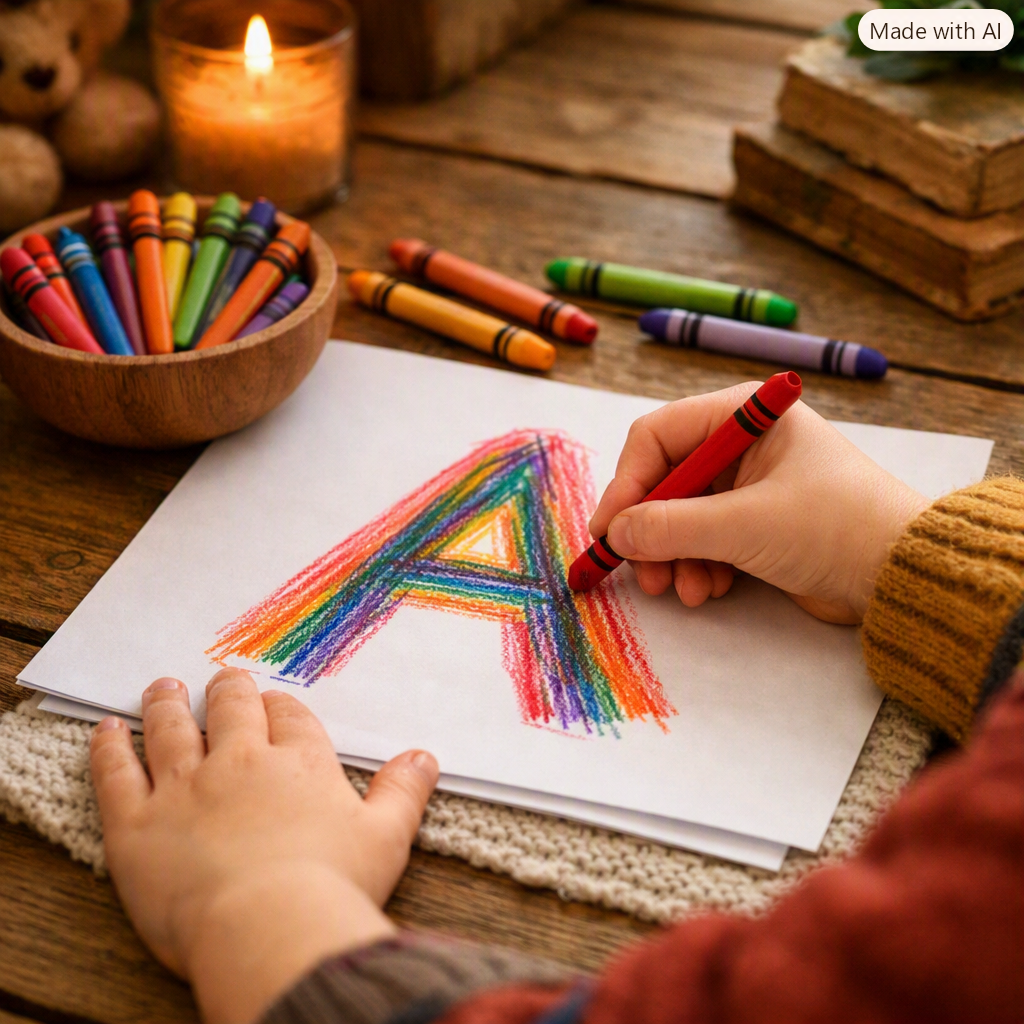
We like to practice rainbow writing – tracing the same letter or shape in layers of color. Cody, in preschool, is practicing drawing a square. Freddie, in first grade, is reinforcing letter formation.
Rainbow tracing is about slowing down enough to notice what their hands are doing. It’s about giving them space to repeat a movement until it feels familiar. It’s about letting them enjoy the colors and the process instead of rushing to the end.
🌿 Step 1: Feel the Shape or Letter First
Before we ever touch paper, we begin with movement and sensation. This helps both boys connect with the shape and settle into the moment.
• Trace the shape or letter on each other’s hand — slow, steady, one stroke at a time.
• Draw it in the air together — big, sweeping motions that match the real stroke order.
• Write it on each other’s back — they guess the shape or letter, then you switch roles.
• Show a clear visual — point to each stroke as you model it.
This step slows their bodies, focuses their attention, and helps the shape or letter make sense before they ever touch paper.
For Freddie, who tends to rush, this is essential.
For Cody, who is more likely to take his time, it builds early attention skills in a playful, gentle way.
✏️ Step 2: Begin Rainbow Writing
Once the shape or letter is in their bodies, we move to the page.
• Start with the first color and trace the shape or letter slowly.
• Switch colors and retrace the same strokes.
• Repeat through the rainbow — each layer adds confidence and clarity.
• Pause and admire the soft, glowing rainbow they created.
Freddie uses rainbow writing right now to reinforce letter formation — slowing down enough to notice each stroke instead of rushing through them.
Cody is using it to learn to form a square. The rainbow layers help him see the straight lines and corners more clearly.
Rainbow writing turns practice into something soothing and playful. It gives both boys a reason to slow down and notice what their hands are doing.
💛 A Gentle Script You Can Use
“Let’s feel it first. I’ll draw it on your hand… now in the air… now on your back.
Ready? Now we’ll make it slowly with each color. Watch how it grows stronger every time.”
Simple words, but they help children stay present instead of rushing.
🌈 Why This Works
• Multi‑sensory learning helps the brain lock in the shape.
• Repetition feels playful instead of frustrating.
• Slowing the body slows the mind — perfect for wiggly or fast‑moving kids.
• Confidence builds naturally with each colorful layer.
• Motor planning improves — tracing the same strokes in different colors helps children understand how their hand needs to move, building smoother, more coordinated writing over time.
• It teaches children the lifelong skill of paying attention to what they’re doing, not just finishing quickly.
A Friendly Note on Motor Planning
Motor Planning is just a fancy way of describing how a child’s brain tells their hand what to do next. When kids trace the same shape or letter in different colors, they’re practicing the sequence of movements – where to start, how long a line should be, when to turn, and how to finish.
It’s a gentle way to strengthen the “plan” their brain makes before their hand moves – which supports handwriting, drawing, and even everyday tasks like buttoning, cutting, and tying shoes.
At home, you know your child’s natural pace better than anyone. You see when they rush, when they linger, and when they need a moment to breathe. School often moves quickly — not by choice, but because teachers are guiding many children at once. Rainbow writing gives you a way to support your child’s learning in a slower, more intentional rhythm, one that honors who they are and how they focus best.
🌤️ A Cozy Learning Moment
There’s a quiet magic in the way rainbow writing settles our afternoons.
The crayons spread across the table.
The boys leaning close, tracing slowly. The soft chatter between them.
The hum of the house in the background.
The way time seems to stretch just a little.
Freddie slows down enough to notice each stroke. Cody traces each line of his square with careful attention. They’re learning letters and shapes — but they’re also learning how to pause, how to focus, how to be present.
Rainbow writing didn’t just help them slow down. It helped me slow down too.
🌾 A Parent‑Affirming Closing
At the end of the day, you know your child better than anyone — their pace, their energy, their quirks, their tender spots, the way they learn best. Rainbow writing is just one small tool, but it becomes powerful in your hands because you’re the one guiding it. You’re the one noticing when they rush, when they linger, and when they need a moment to breathe. You’re the one creating a home where learning can happen slowly, gently, and with intention.
School may move quickly, and that’s okay — teachers care deeply and juggle so much. But at home, you get to offer a different rhythm. A softer one. A pace that honors who your child is right now. These cozy learning moments aren’t about perfection; they’re about connection. They’re about helping your child feel capable, calm, and proud of their effort.
You’re doing beautifully. And every slow, colorful stroke you share with your child is a reminder that learning doesn’t have to be rushed — it can be warm, steady, and full of heart.
Your Gentle Reflection
Take a quiet moment for yourself
1. Home vs. School Rhythm
How does your child’s natural learning rhythm at home differ from the pace expected at school, and how can you support them in a way that honors who they are?
2. Your Presence
How did slowing down with your child affect your sense of calm, connection, or patience?
3. Confidence Moments
When did you notice your child feeling proud of their work?
 familyharmonyhome
Leave a comment